Hi, my name is Shanie Bisson. I live in Pointe-Calumet and I have been studying visual arts for a year and a half (3 sessions). This program consists of developing and experimenting with techniques of drawing, painting, photography, video, sculpture, and understanding the history of the arts over time. These programs are a pre-university and I have access to over 150 programs at the end of my studies.The glossary I create is used to give specifications on the techniques and information that a student in general learns during the first or second session. Each of these words is often used in the classroom, so it is important to understand and master them. The glossary will help you better analyze the works and understand them as an artist would.
Chiaroscuro
noun
Contrast between light and shadow used to create the illusion of a three-dimensional shape on a two-dimensional surface.
Example: Chiaroscuro gives interesting shadows and lights in a drawing, photography or painting.
fr: Clair-obscur
Chromatic circle
noun
Circular arrangement of pure colors, based on how the paint pigments of the primary colors mix together to form the secondary colors (red, purple, blue, green, yellow, orange); can also include tertiary colors.
Example: The color wheel is very useful in painting, to help create color mixtures.
fr: Cercle chromatique
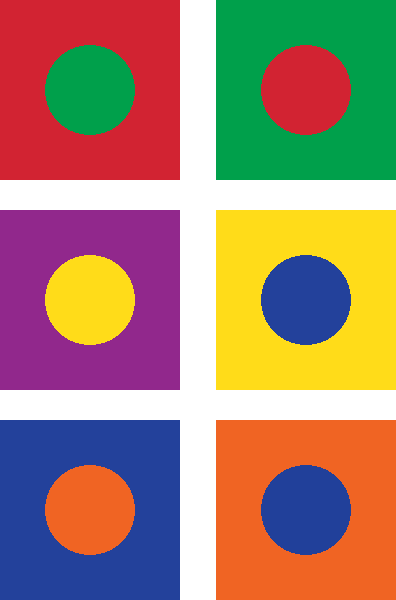
Complementary colors
noun and adjective
Colors which are distributed in opposition on either side of the chromatic circle, for example, red and green, or orange and blue. They are called complementary, because they seem to intensify one and the other when juxtaposed.
Example: Complementary colors create beautiful compositions and effects mostly in painting.
fr: Couleurs complémentaires
Composition
noun
Arrangement of elements in a work of art.
Example: The composition is very important since it allows creating a work with specific aspects.
fr: Composition
Contour
noun
Lines defining the edges or boundaries of a shape.
Example: Outlines are used to form a precise object or shape.
fr: Contour
Cross hatching
noun and adjective
Shading technique consisting of crossing two or more networks of parallel lines.
Example: Cross hatching is a quick way to create shadows.
fr: Hachures croisées
Opaque
adjective
Quality of a material that does not let any light pass.
Example: The wings of a butterfly are opaque since we cannot see through it (another example, we cannot see through several layers of paint so it is opaque).
fr: Opaque
Optical illusion
noun
Table style that gives the illusion that the objects represented have three dimensions.
Example: Rectangles created through the optical illusion give the impression that it's can move or falling into the void.
fr: Illusion d'optique (Trompe l'oeil)
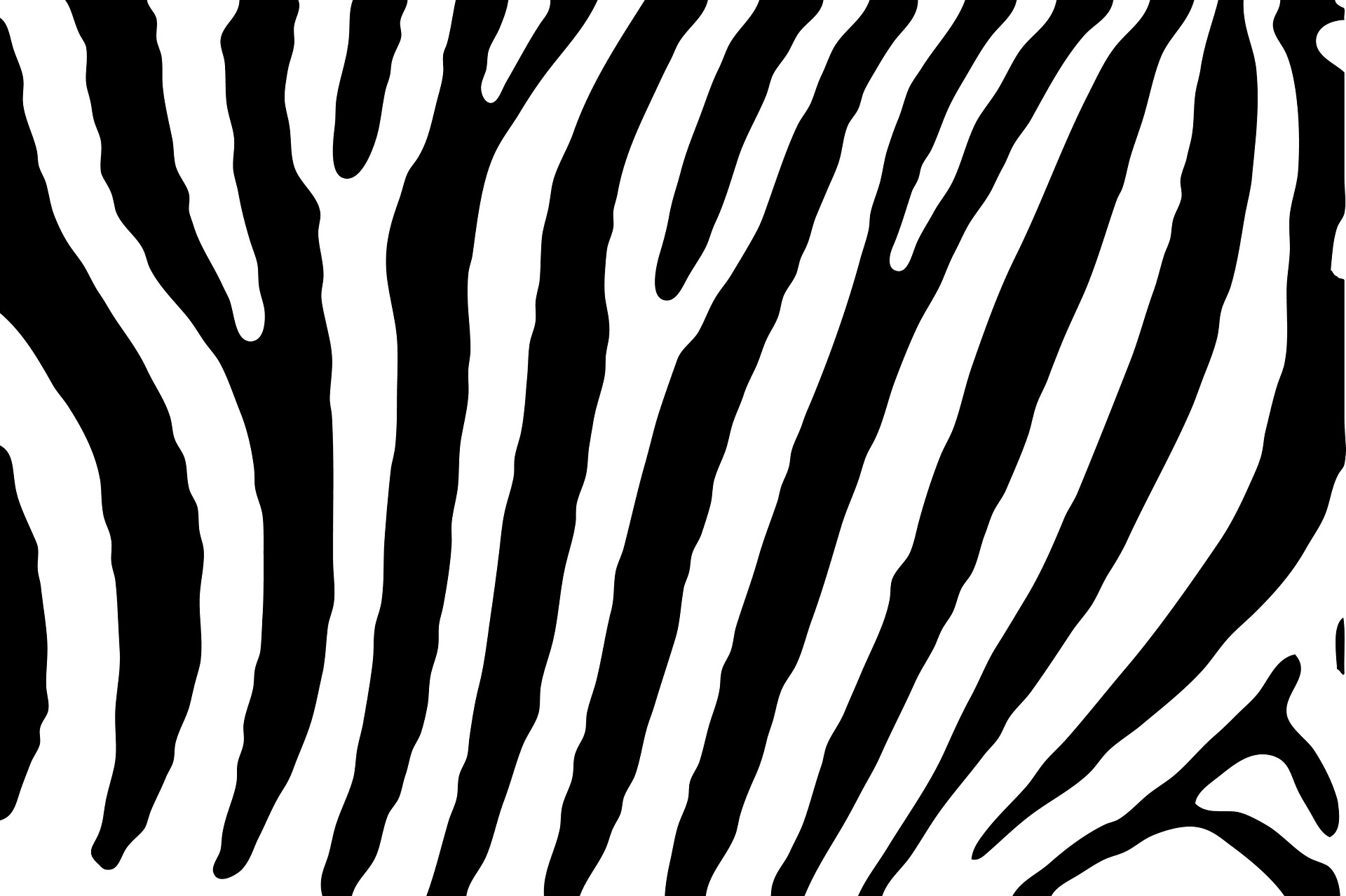
Pattern
noun
Repeated ornament to create visual rhythm.
Example: A row of geometric figures or a mosaic of colors placed alternately are patterns.
fr: Motif
Primary colors
noun and adjective
The three colors (red, yellow and blue) that can be mixed to obtain the other colors; primary colors cannot be created by mixing other colors.
Example: The blue, yellow and magenta (red), are the basis of everything in painting.
fr: Couleurs primaires
Scale
noun
Size ratio between two elements of different size.
Example: The scale is often used in drawing to measure our shapes and place it to represent them as realistically as possible.
fr: Échelle
Sculpture
noun
Representation of an object in space, by means of a material on which an aesthetic form is imposed; set of techniques that allow this representation; set of resulting works of art.
Example: A sculpture can be made of several materials (wood, stone, clay, etc.).
fr: Sculpture
Shade
noun
Each of the degrees obtained by mixing a very small amount of another color.
Example: A gradient is a type of shade.
fr: Nuance
Sketch
noun
Small drawing executed quickly to describe an idea or a gesture, or to plan a composition.
Example: The sketch is used when we want to make a plan of our idea.
fr: Croquis
Skyline
noun
Technique used to create the illusion of depth on a flat surface. The lines of buildings and other objects converge at a vanishing point on the horizon line (located at the eye level of the observer).
Example: The horizon line is the visual point that we see in making a perspective drawing.
fr: Ligne d'horizon
Symmetry
noun
Balance or repetition of one part of a form, image or composition, versus another.
Example: Symmetry is often used in abstract image composition.
fr: Symétrie
Texture
noun
Restoring the quality of a surface by adding a three-dimensional material, such as textured paint or tactile collage materials.
Example: Texture gives an impression of substance in a design, photography or canvas.
fr: Texture
Translucent
adjective
Quality of a material that allows diffused light to pass through.
Example: Something translucent is something that can be seen through (like a clear plastic bag).
fr: Translucide
Vanishing Point
noun
The point at which receding parallel lines viewed in perspective appear to converge.
Example: The vanishing point is one of the most important elements in constructing a perspective drawing.
fr: point de fuite
Warm colors
noun and adjective
Colors associated with heat and fire; colors containing yellow, orange and red; warm colors seem to be projected forward, unlike cold colors which produce a distancing effect.
Example: The warm colors represent more the colors seen in the autumn (red, yellow, orange, etc.).